
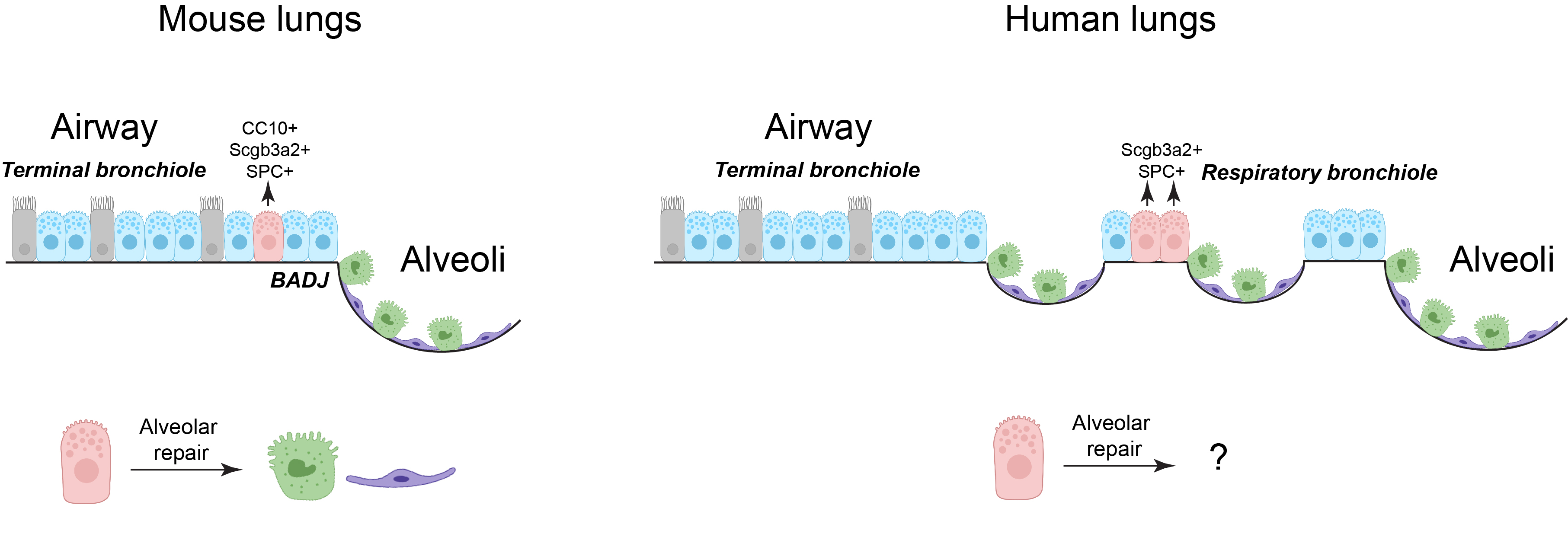
Hybrid epithelial states reveal that lineage identity is actively regulated, not fixed and may be relevant to regenerative potential
The airway–alveolar interface of the mouse lung contains epithelial cells with features of both airway secretory (club) cells and alveolar type II (AT2) cells. These hybrid cells can contribute to both airway and alveolar repair following injury and may play important roles in regeneration after alveolar damage and fibrosis.
Although the organization of the airway–alveolar interface differs substantially between mice and humans, recent studies suggest that respiratory bronchioles in the human lung also contain epithelial populations with mixed airway and alveolar characteristics. This raises the possibility that hybrid epithelial states represent a conserved mechanism for regional lung repair.
Our laboratory studies the developmental origins of these cells, the signals that regulate their behavior, and their potential roles in human lung regeneration and diseases such as pulmonary fibrosis.